Ask a collector anywhere in the world where the finest handcrafted ship models come from, and many will answer: Mauritius. For a small island in the Indian Ocean, that reputation is remarkable. It did not come from factories or from kits — it came from a handful of passionate craftsmen, historic plans and more than fifty years of patient work.
1969: one model, one ambassador, one new craft
The story of ship modeling in Mauritius begins in 1969 with José Ramar. Raphaël Touze, the first French ambassador to the newly independent Mauritius, saw a model ship built by Ramar and was so impressed that he commissioned one for himself. Recognising the talent in front of him, the ambassador arranged for original plans of historic vessels to be sent from the Musée de la Marine in Paris.
With those plans, Ramar gathered a small team of artisans and founded La Compagnie Maquettes José Ramar — Comajora, the island's first commercial ship-model workshop.
The 1970s: the first master workshops
The momentum spread quickly. In 1973 Ramar founded another workshop, Les Plus Belles Maquettes, in Curepipe. Other ateliers followed, notably La Serenissima, led by the Italian artisan Franco. Together, these early workshops set the standard that made Mauritius a world reference for premium, hand-built ship models by the end of the 20th century.
1990: Bobato is born in Vacoas
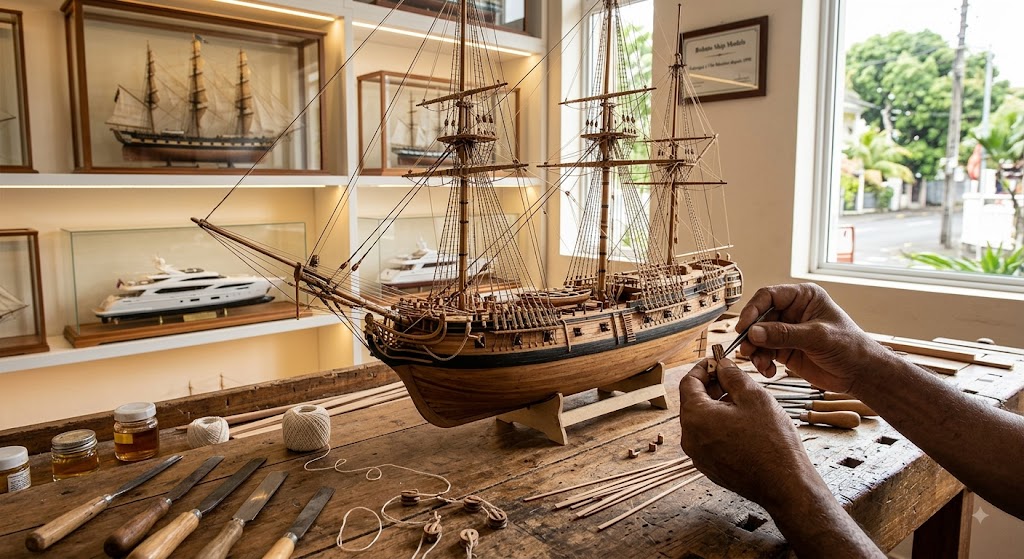
It was in this tradition that master craftsman Kadress Soobaroyen founded Bobato Ship Models in 1990, in a small workshop in Vacoas. From the first day, the rule was simple: every model is built from scratch — from raw hardwood and authentic plans — and never assembled from a kit.
Modernising the craft without replacing the artisan
As the workshop grew, Kadress Soobaroyen made a decisive choice. Instead of relying only on slow, approximate hand-cutting, he brought precision machinery onto the workshop floor — not to replace the artisan, but to serve them. Hull frames and templates are cut to the millimetre; planking, carving, rigging and finishing are still done by hand.
Bobato also began making its own brass and zinc fittings — turned brass cannons, anchors, deadeyes and rigging hardware — and supplying them to other workshops on the island. Its artisans carve and cast historical figureheads, such as the brass unicorn of our La Licorne (the Tintin ship).
Curepipe: La Flotte Ltée
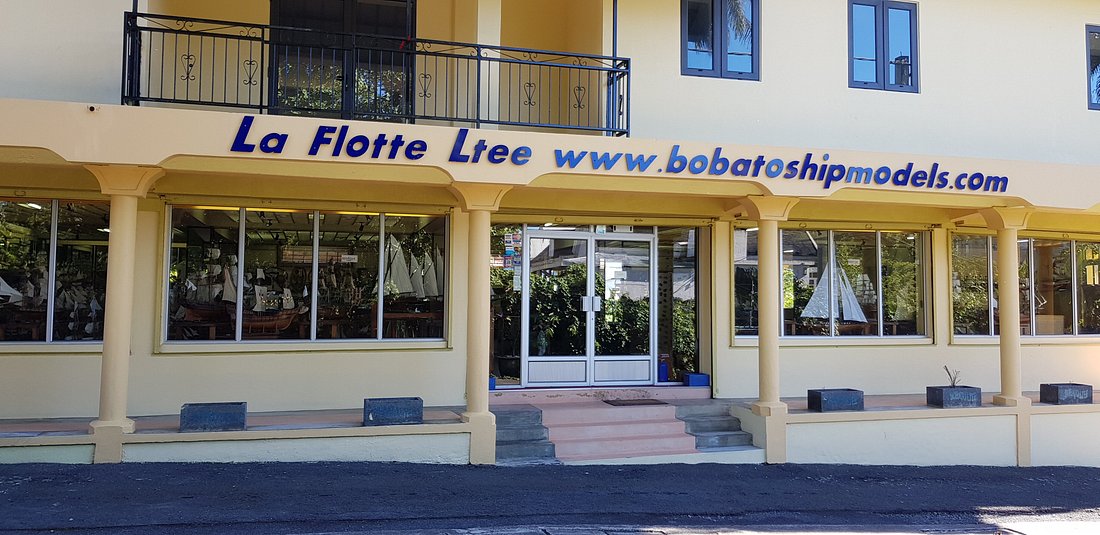
The company, registered as La Flotte Ltée, settled at 53A Sir John Pope Hennessy Street, Curepipe, where our showroom welcomes visitors and collectors today. Every custom piece is built from naval architecture plans, archives and photographs, so its scale is faithful to the original vessel.
Mauritian ship models today
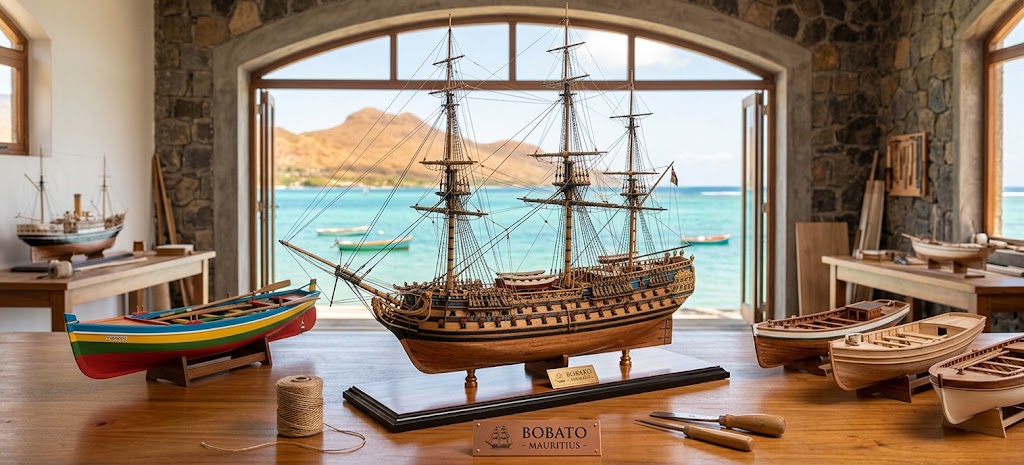
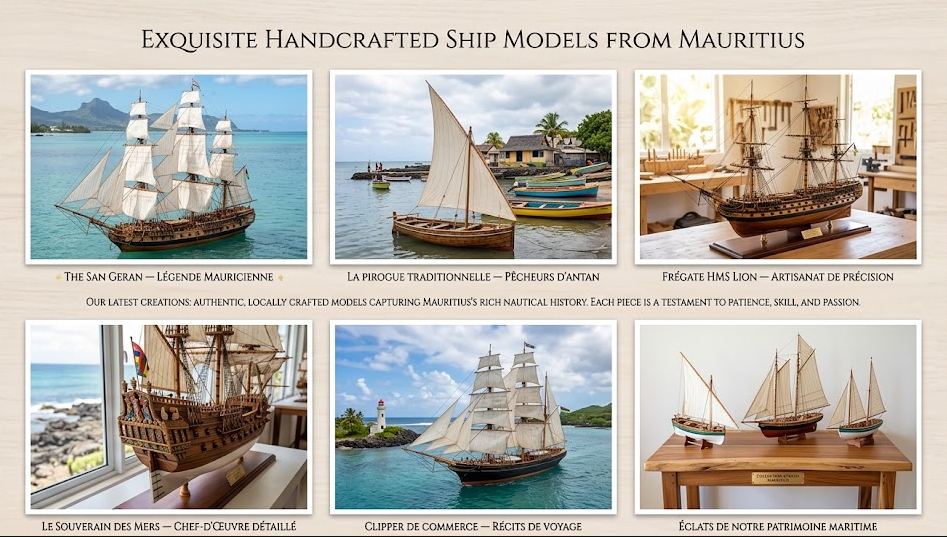
More than half a century after José Ramar's first model, Mauritian ship models are found in private collections, yacht clubs, hotels and offices all over the world. At Bobato, we are proud to carry that heritage forward: ready-made models from our showroom, and custom-made historical ship models built to order and shipped, crated and insured, anywhere in the world.
Visit or contact us
Discover our handcrafted ship models, read our story, or visit the showroom in Curepipe (Monday to Friday, 9:00–17:00). For a custom model, send us your project on WhatsApp at +230 5830 0277 — no online payment is taken; your invoice is sent by email.
Source on the history of the craft: The New York Times, "Ships of Mauritius: Models of Fine Craft", 4 February 1990.